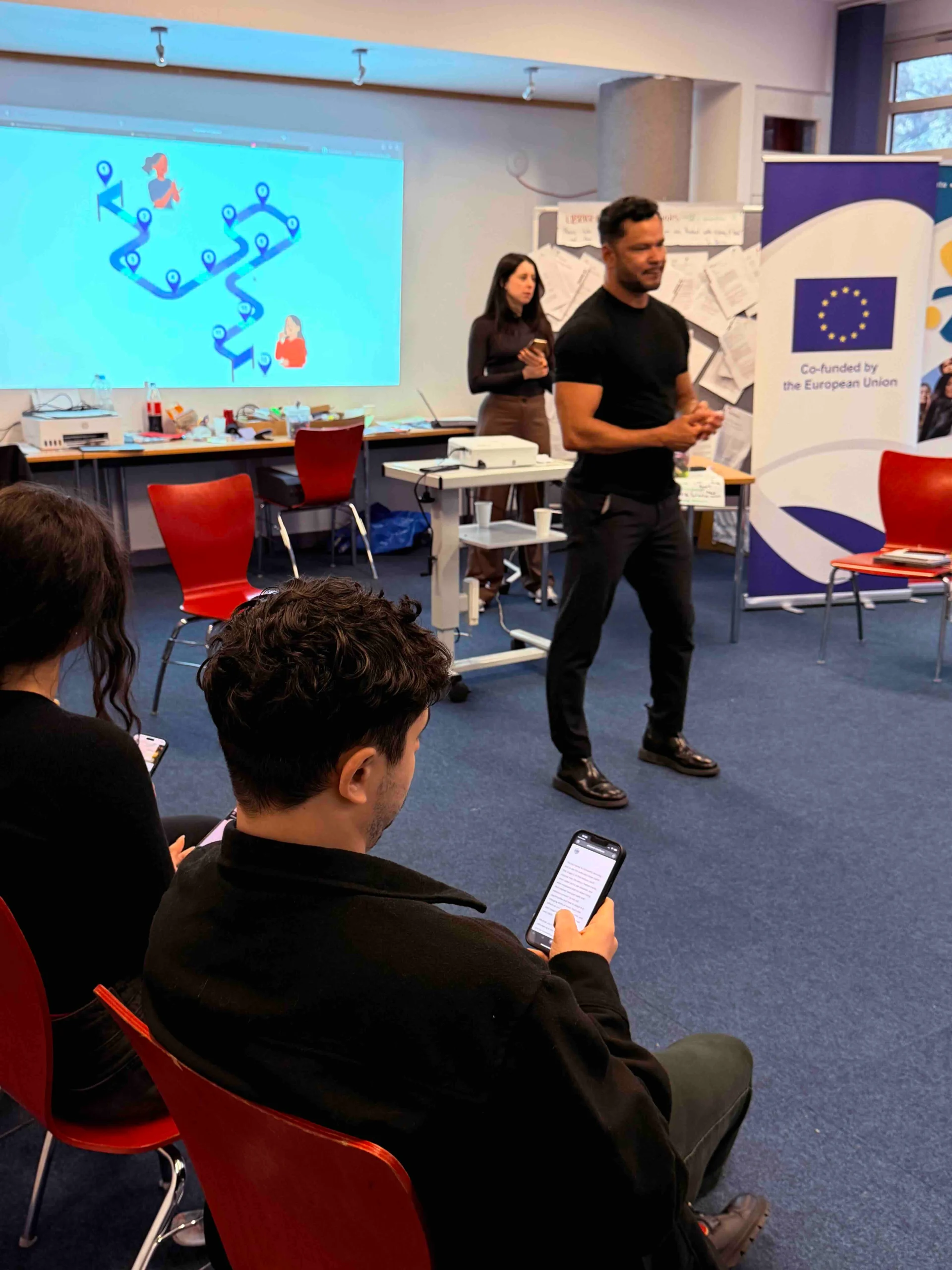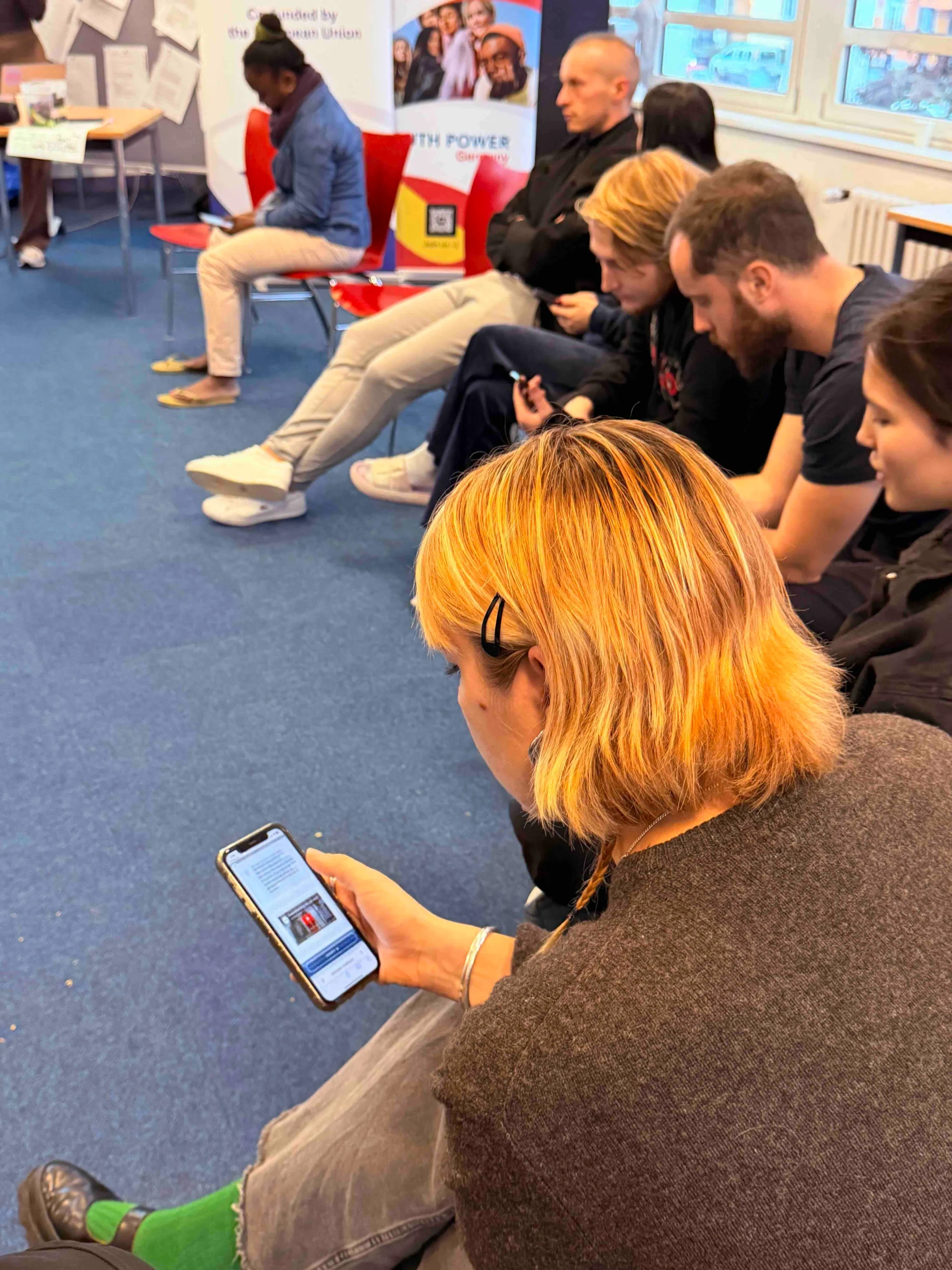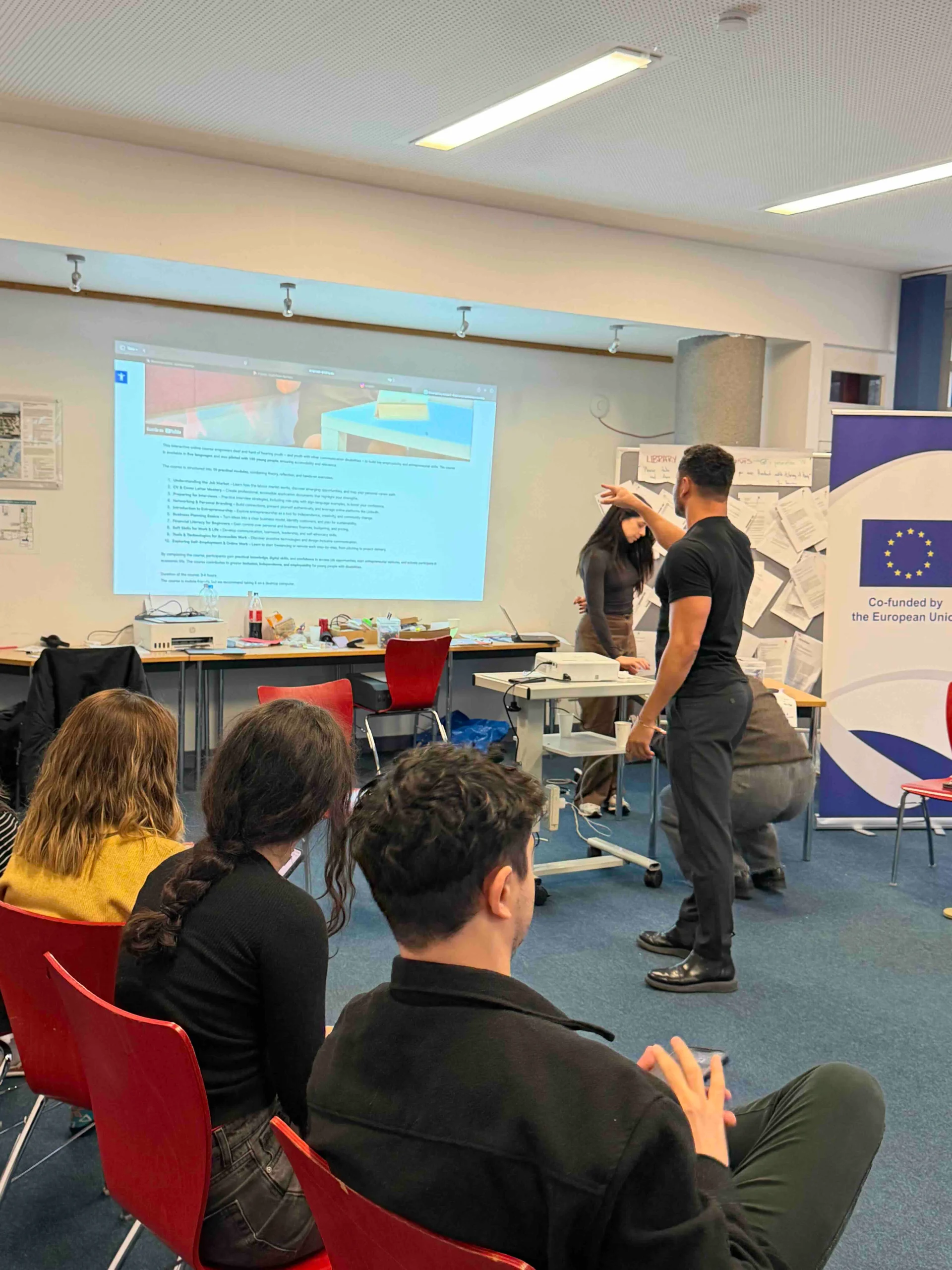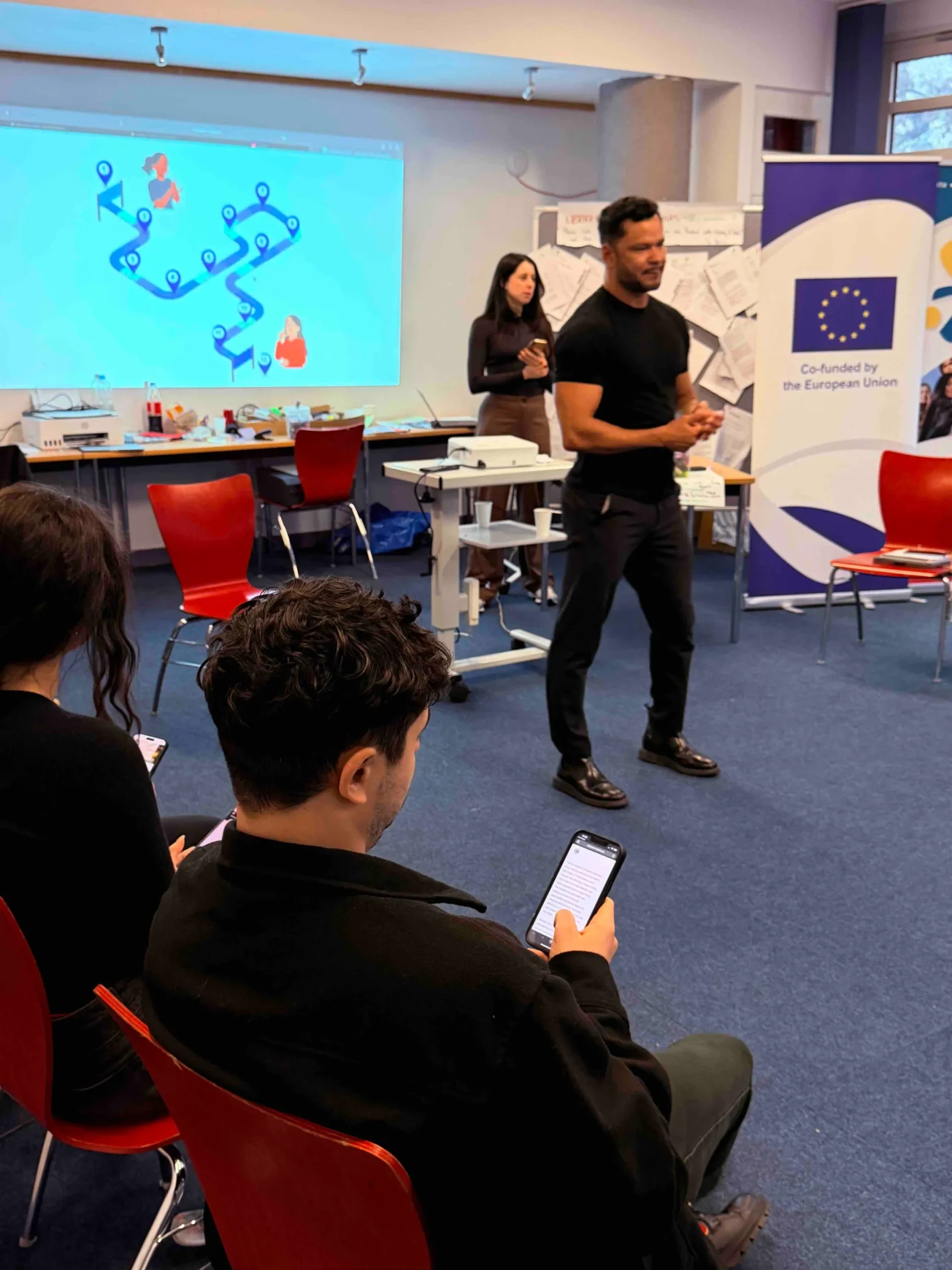
Youth Power Germany e.V. successfully conducted an in-person testing session of the second online learning course developed within the Taking Matters Into Our Own Hands: Employment and Entrepreneurship project. The session took place in Berlin and brought together 25 young participants, including deaf and hard of hearing youth, ensuring a strong focus on inclusion and accessibility.
Participants were introduced to the course objectives, structure, and expected learning outcomes before being guided through the platform’s navigation and accessibility features. They were then invited to explore the modules independently, while facilitators observed usability, engagement, and overall learning experience.
A key strength of the session was its inclusive approach. To ensure equal participation, a range of accessibility measures were implemented, including AI-based live captioning tools, real-time transcription applications, and written instructions. Facilitators also used visual support tools and structured communication methods to ensure clarity and inclusivity throughout the session. This combination of technical and facilitation strategies significantly reduced communication barriers and supported active participation of deaf and hard of hearing participants.
Feedback from participants was highly positive, particularly regarding the clarity and relevance of the course content. Many highlighted that the modules were well-structured and easy to follow, while practical examples helped them connect the learning material to real employment situations. Interactive elements were also appreciated, as they contributed to maintaining engagement and focus throughout the course.
At the same time, participants provided constructive suggestions for improvement, mainly related to accessibility and user experience. These included integrating permanent subtitles into video materials, improving contrast between text and background, and adding a visible progress indicator to support navigation. Participants also suggested enhancing the accessibility tool with more customizable options, such as text resizing and contrast adjustments, as well as introducing a certificate upon course completion to increase motivation.
From a youth work and inclusion perspective, the session confirmed that combining accessible technology with adapted facilitation methods is essential for creating inclusive digital learning environments. The use of real-time transcription tools, written summaries, and visual aids proved particularly effective in supporting participation and understanding.