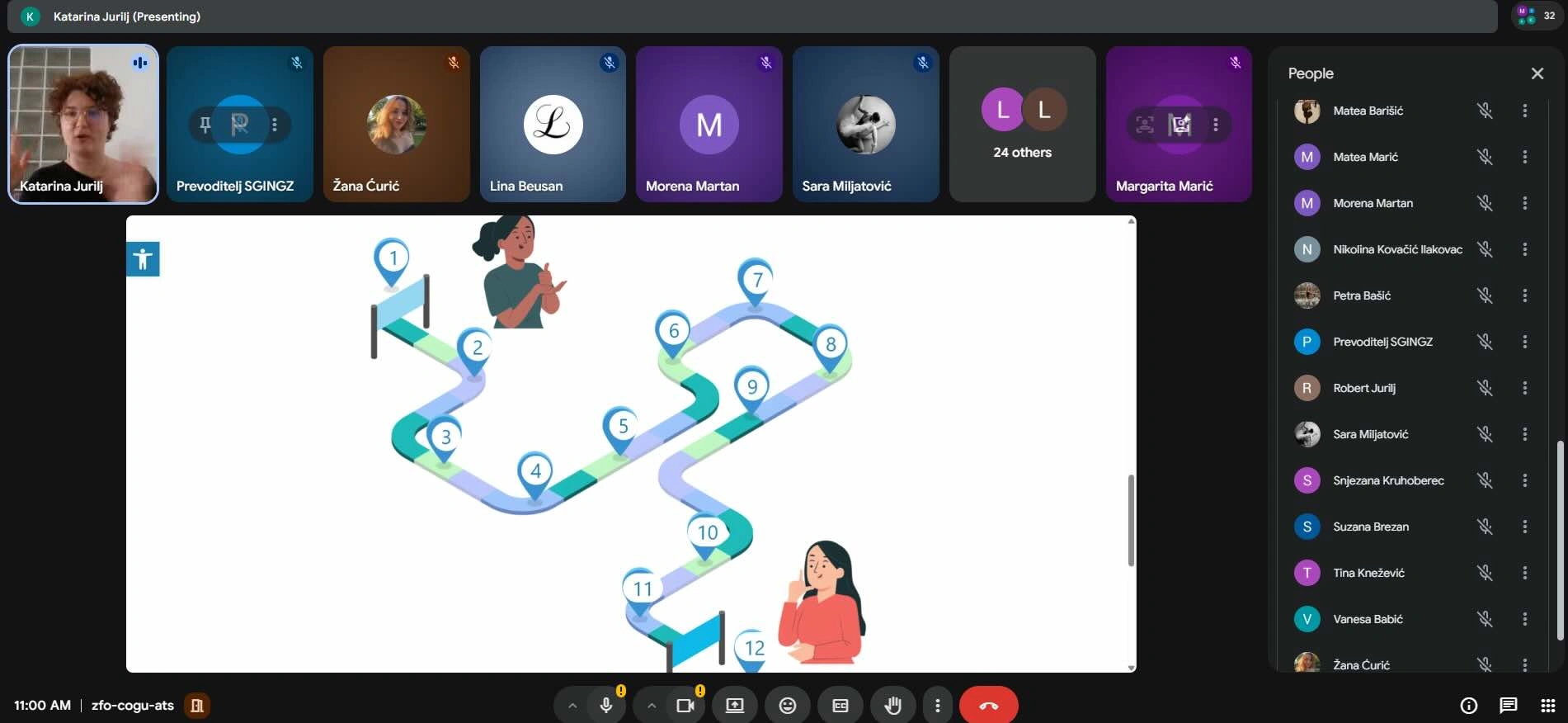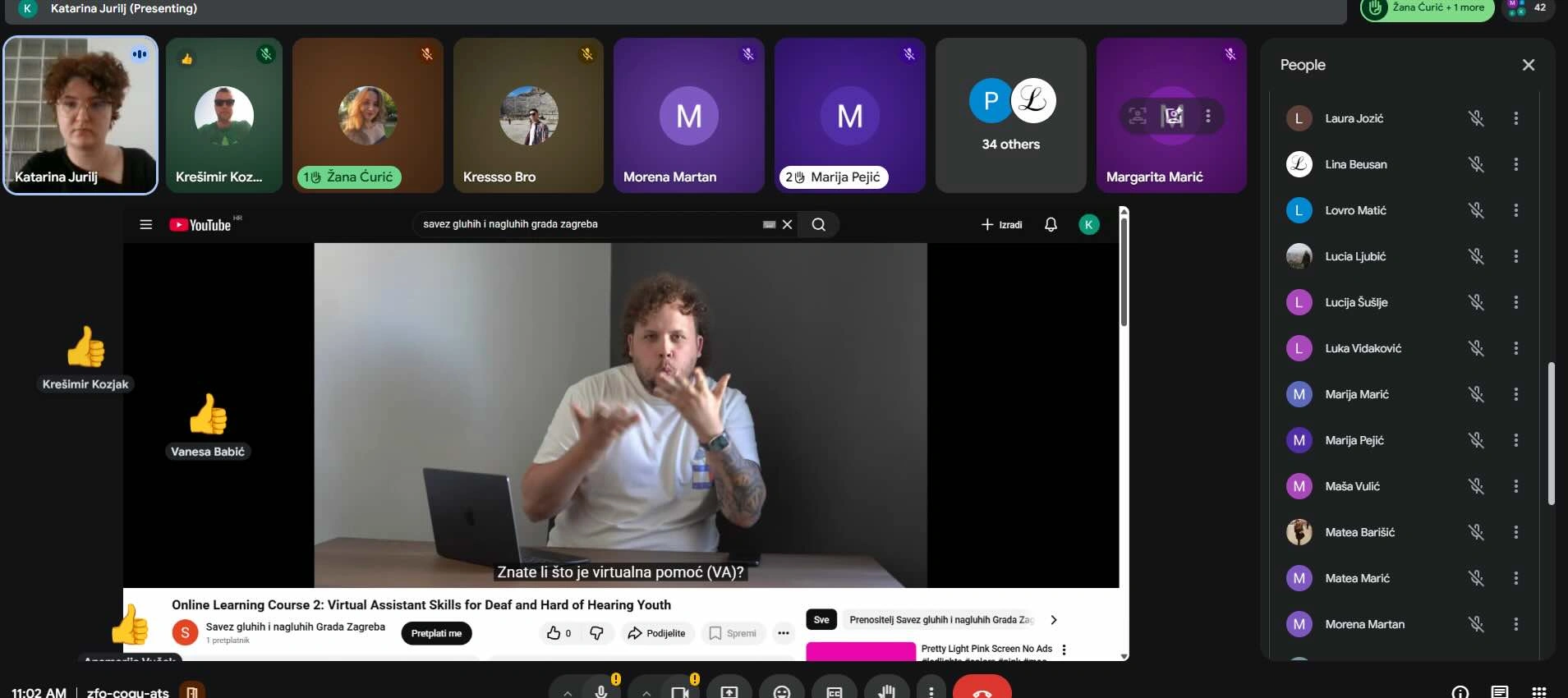
The second online learning course developed within the Taking Matters Into Our Own Hands: Employment and Entrepreneurship project was successfully tested in Croatia. The session was organised by Savez gluhih i nagluhih Grada Zagreba (SGINGZ) and brought together 42 participants, including deaf and hard of hearing youth as well as young people with communication difficulties.
The testing session was conducted online, ensuring a highly accessible and inclusive learning environment. Communication was supported through multiple channels, including Croatian Sign Language interpretation, spoken language, and real-time transcription. Two sign language interpreters were present throughout the session, ensuring smooth and effective communication for all participants.
Participants were introduced to the course structure, objectives, and key topics before being given time to independently explore the modules. During this phase, they actively engaged with the content, asked questions, and interacted with facilitators. The session concluded with a group discussion focused on evaluating the relevance, usability, and accessibility of the course.
Feedback collected from participants indicated a high level of satisfaction with the course content. Most participants found the topics relevant, practical, and useful for their personal and professional development. The structure of the course was generally considered clear and logical, allowing users to navigate the modules with ease.
At the same time, the testing provided valuable insights into areas for improvement. Technical accessibility received slightly lower ratings compared to content and structure, with participants suggesting enhancements in navigation, readability, and overall usability. Participants also highlighted the need for clearer instructions, additional real-life examples, and more interactive elements such as quizzes and short exercises to further increase engagement.
Suggestions for improvement also included adding summaries at the end of modules to support learning, dividing longer sections into smaller units for better concentration, and providing additional learning resources for further exploration. These recommendations reflect the diverse needs of participants and underline the importance of continuous development.
Overall, the testing confirmed that Online Learning Course 2 is a valuable and relevant educational tool. Participants highlighted its clarity, practical approach, and ability to support reflection on their skills, interests, and employment opportunities. The feedback gathered during this session will play a key role in further refining the course, ensuring it becomes an even more accessible, engaging, and inclusive digital learning resource.