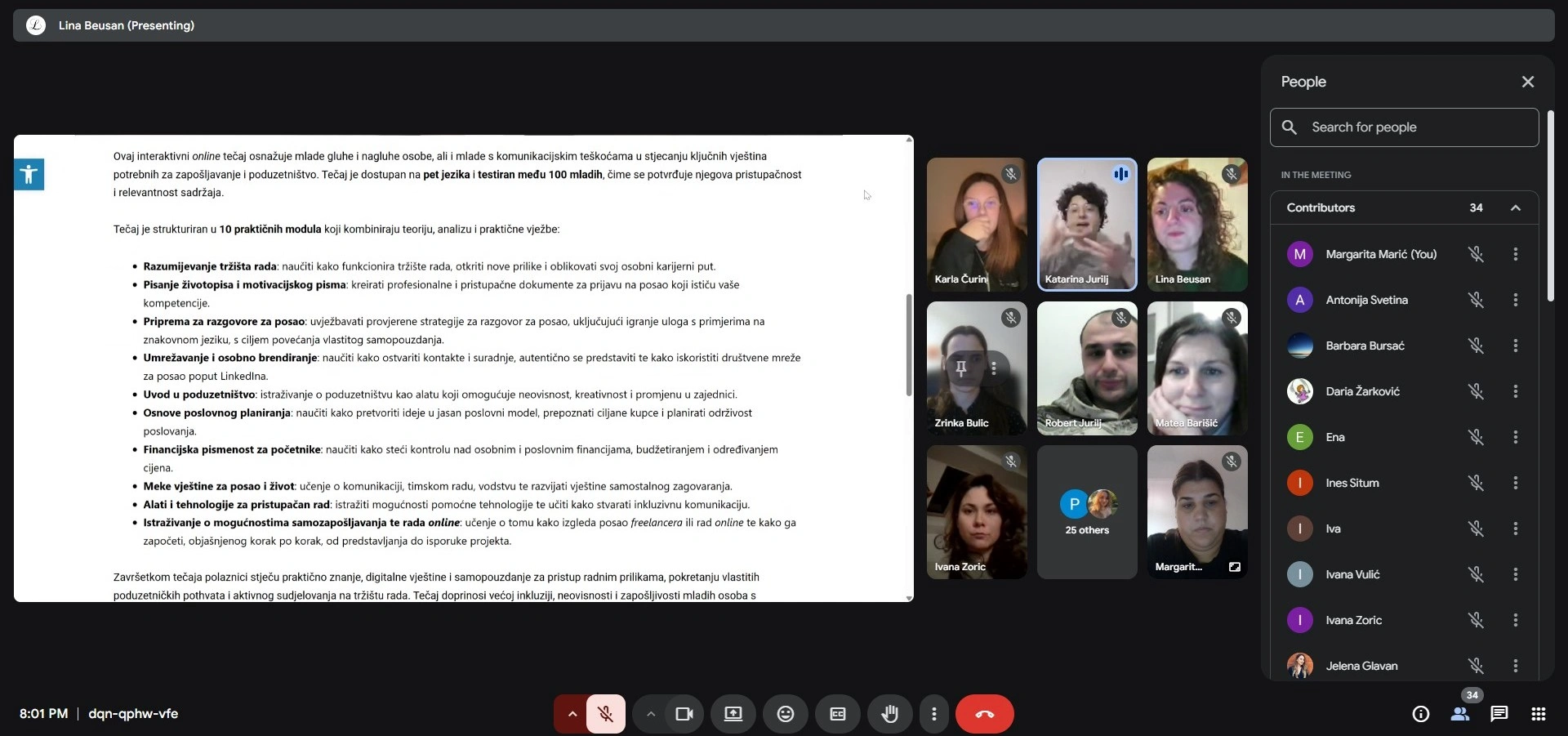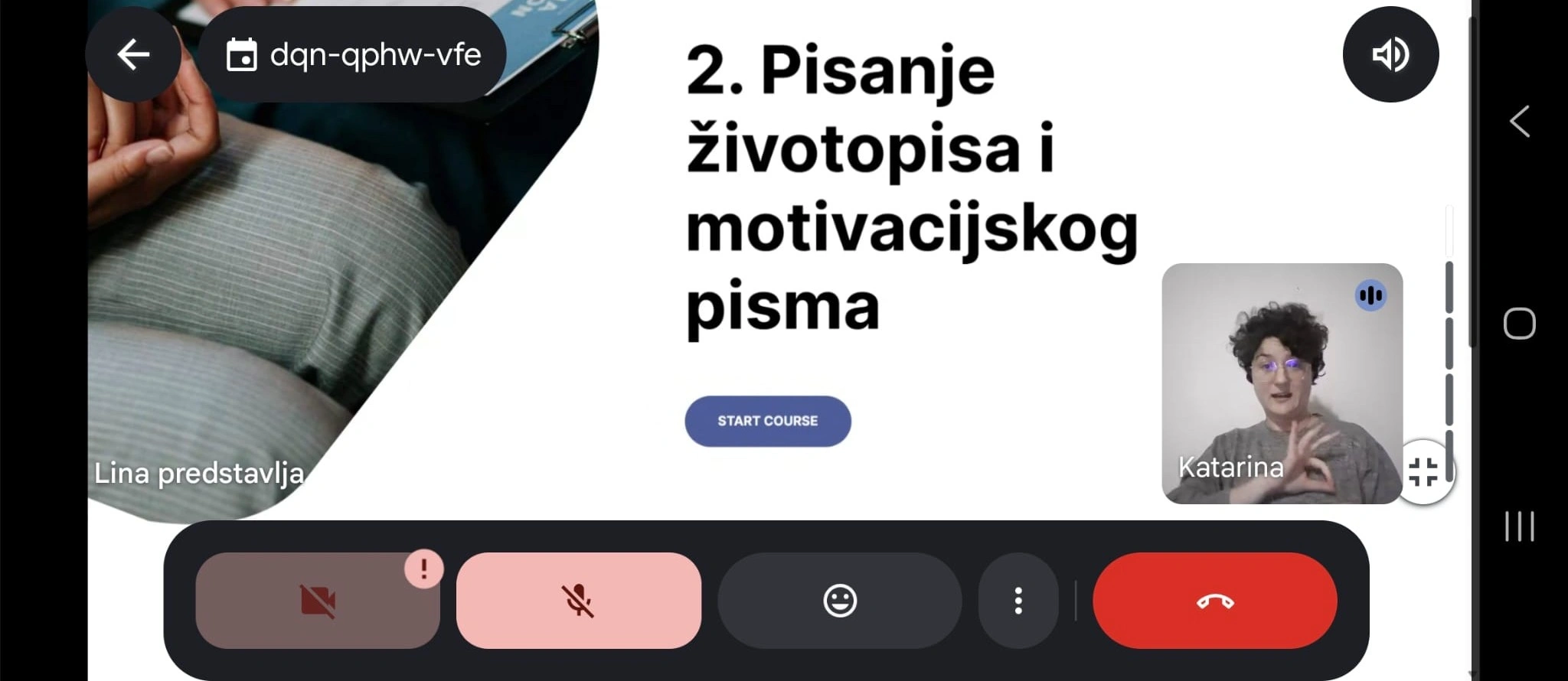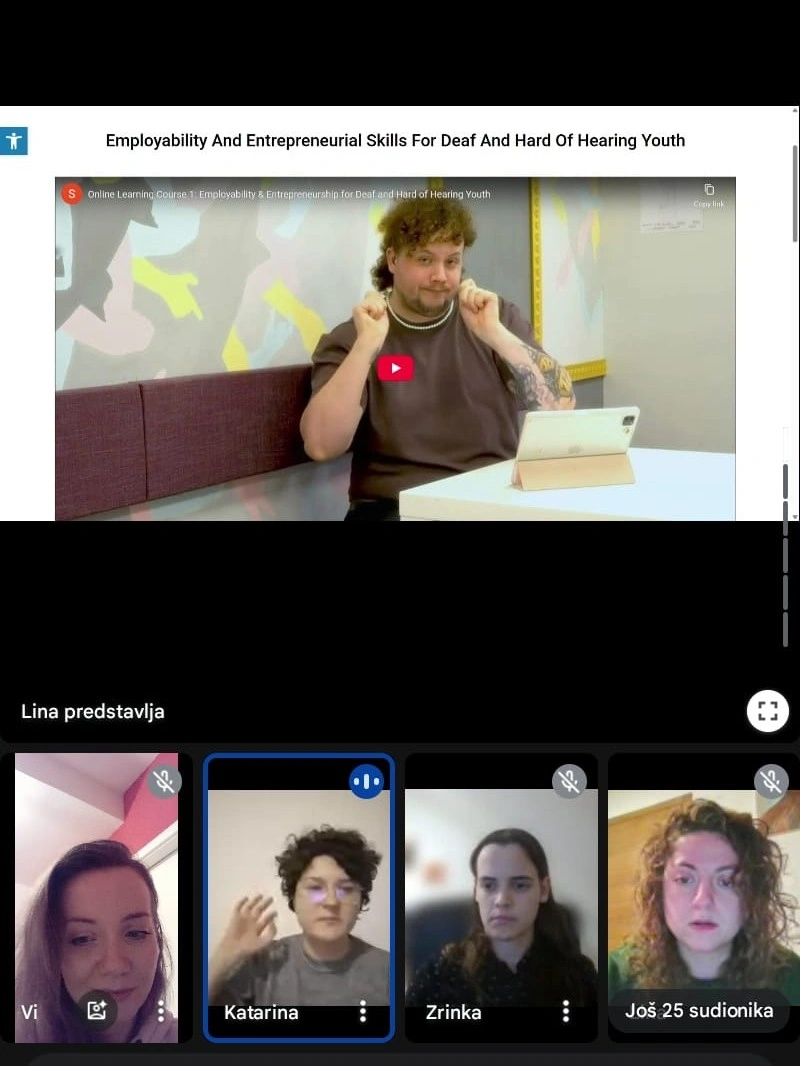
The first online learning course developed within the Taking Matters Into Our Own Hands: Employment and Entrepreneurship project was successfully tested. The session was organised by Savez gluhih i nagluhih Grada Zagreba (SGINGZ) and brought together 32 participants, including 26 deaf and hard of hearing young people.
The testing session was conducted online, providing participants with the opportunity to explore the course in an accessible and inclusive environment. Particular attention was given to ensuring equal access to communication, with the session delivered through Croatian Sign Language, supported by spoken interpretation and automatic transcription. This multi-channel approach enabled participants to follow the content in ways best suited to their individual communication preferences.
During the session, participants were introduced to the course structure, topics, and objectives, after which they independently explored the modules. This hands-on approach allowed them to engage directly with the content, test different activities, and raise questions with facilitators. The session concluded with a group discussion focused on the relevance, usability, and accessibility of the course.
Feedback collected from participants highlighted a high level of satisfaction with the course content and clarity. Most participants found the topics relevant and the materials easy to understand, confirming the quality and accessibility of the learning design. The course structure was generally considered logical and well-organized, although some participants suggested that further improvements could enhance navigation between modules.
At the same time, the testing provided valuable insights into areas for improvement, particularly in relation to technical accessibility. Participants highlighted the need for improvements in readability, visual design, and device compatibility. Suggestions included increasing font size, enhancing visual clarity, and ensuring greater technical stability. Some participants also expressed the need for additional guidance within tasks, such as providing solutions to support learning and self-assessment.
Another important finding was related to how well the course meets participants’ individual needs. While many found the course useful and relevant, feedback indicated that further adaptation could help better address the diverse expectations and learning preferences of deaf and hard of hearing youth.
Overall, the testing of Online Learning Course 1 represents an important step in developing accessible and inclusive digital education. The insights gathered through this process will directly inform further improvements, ensuring that the course becomes more user-friendly, engaging, and responsive to the needs of its target group.