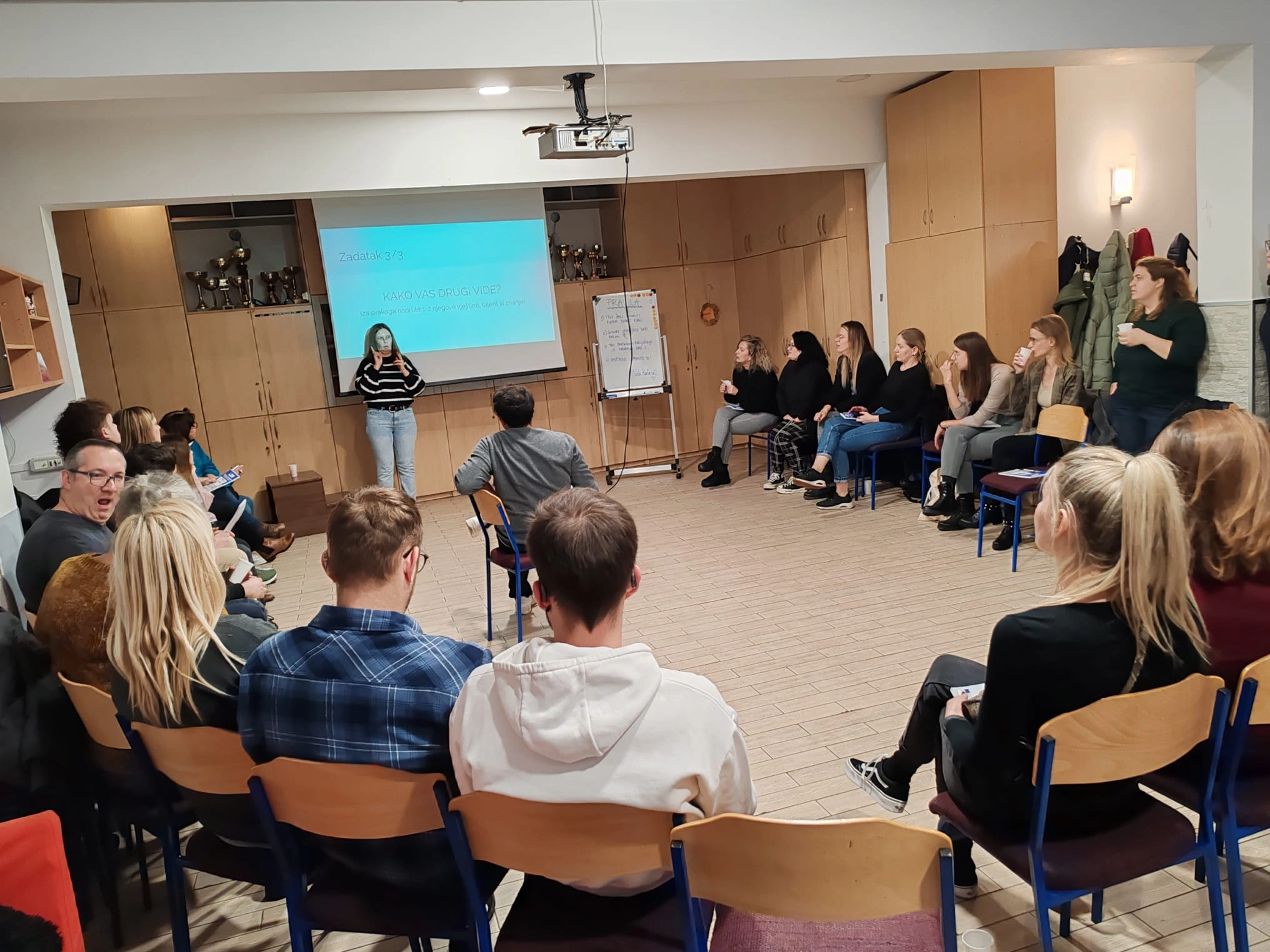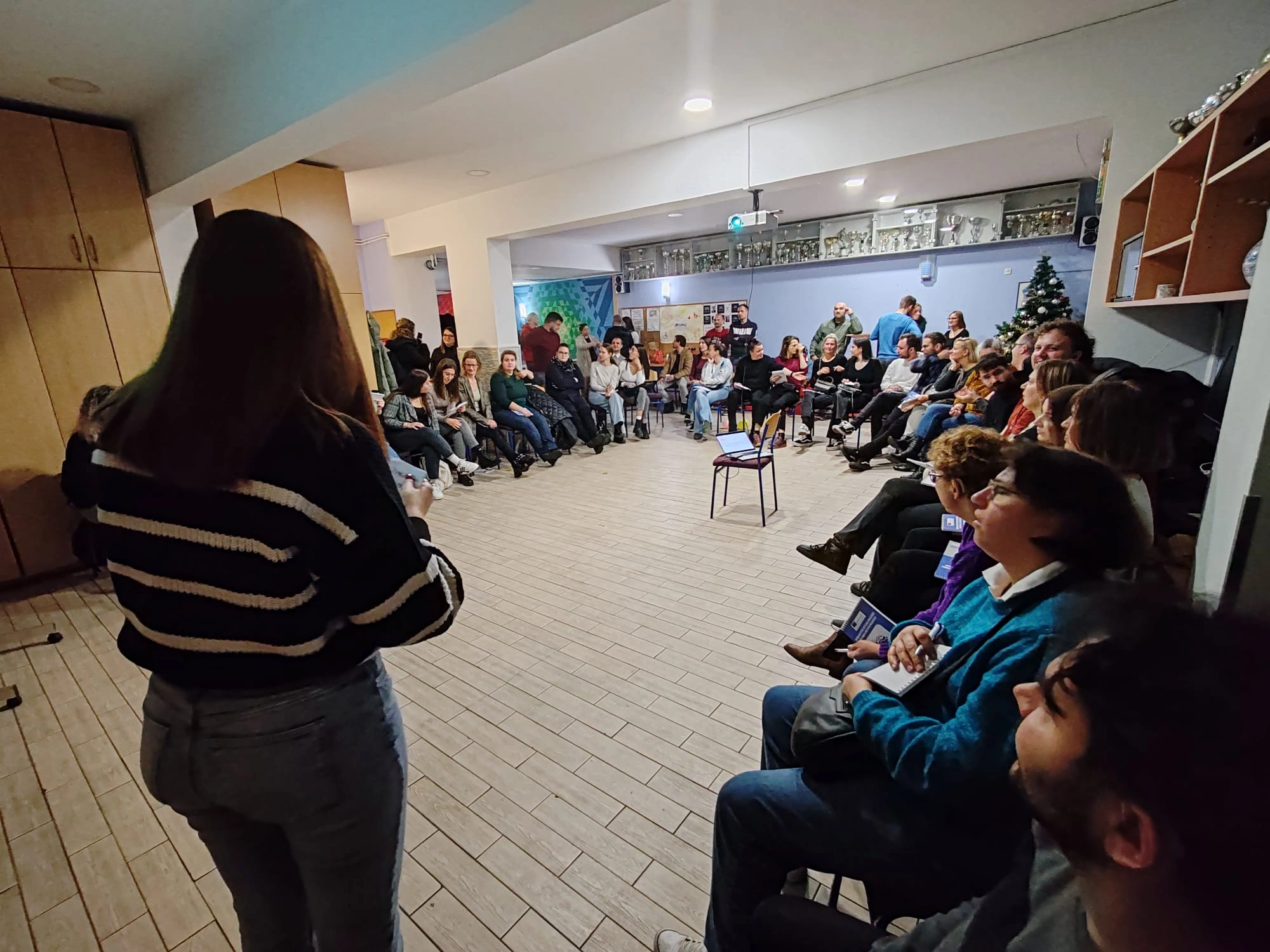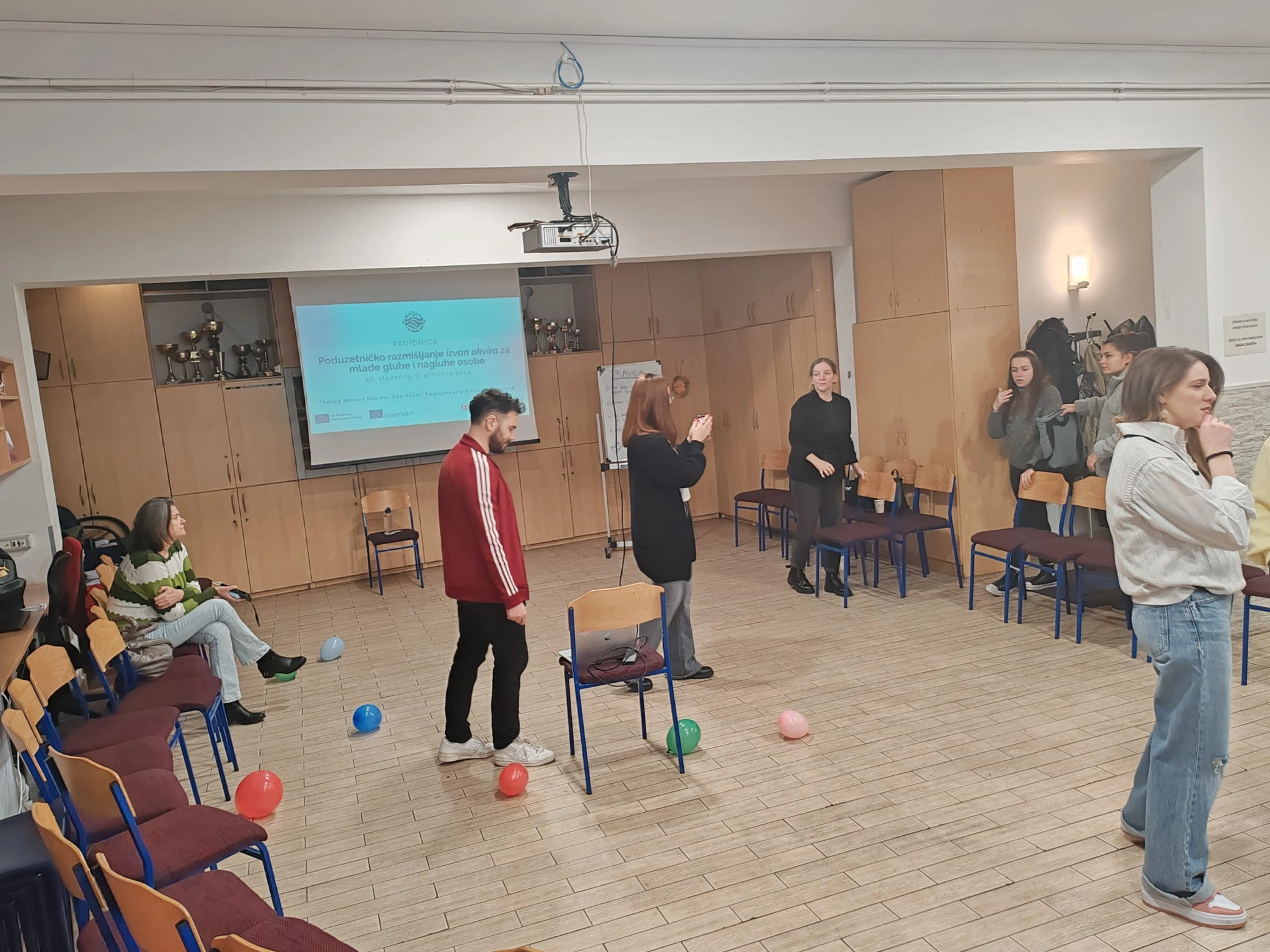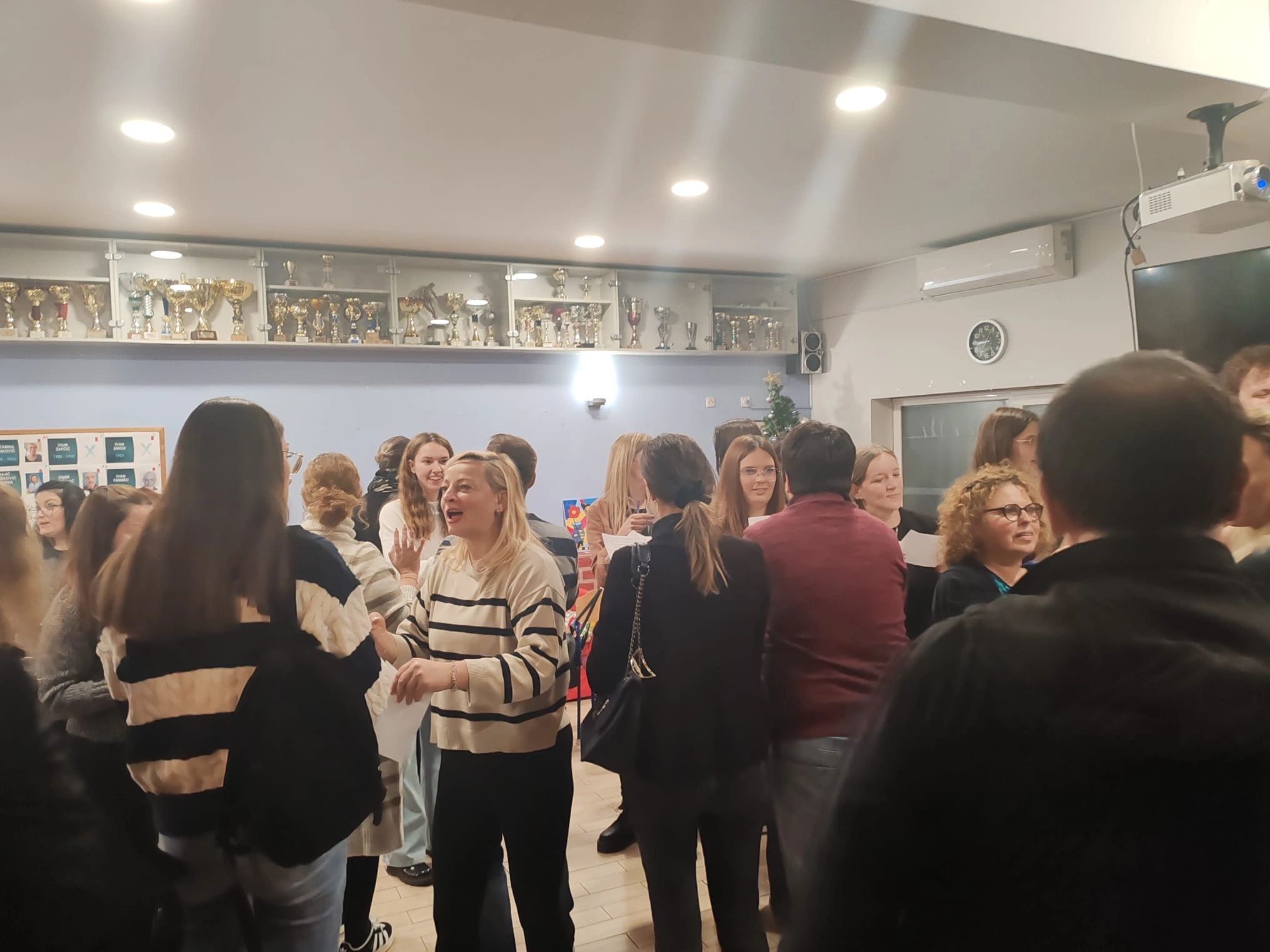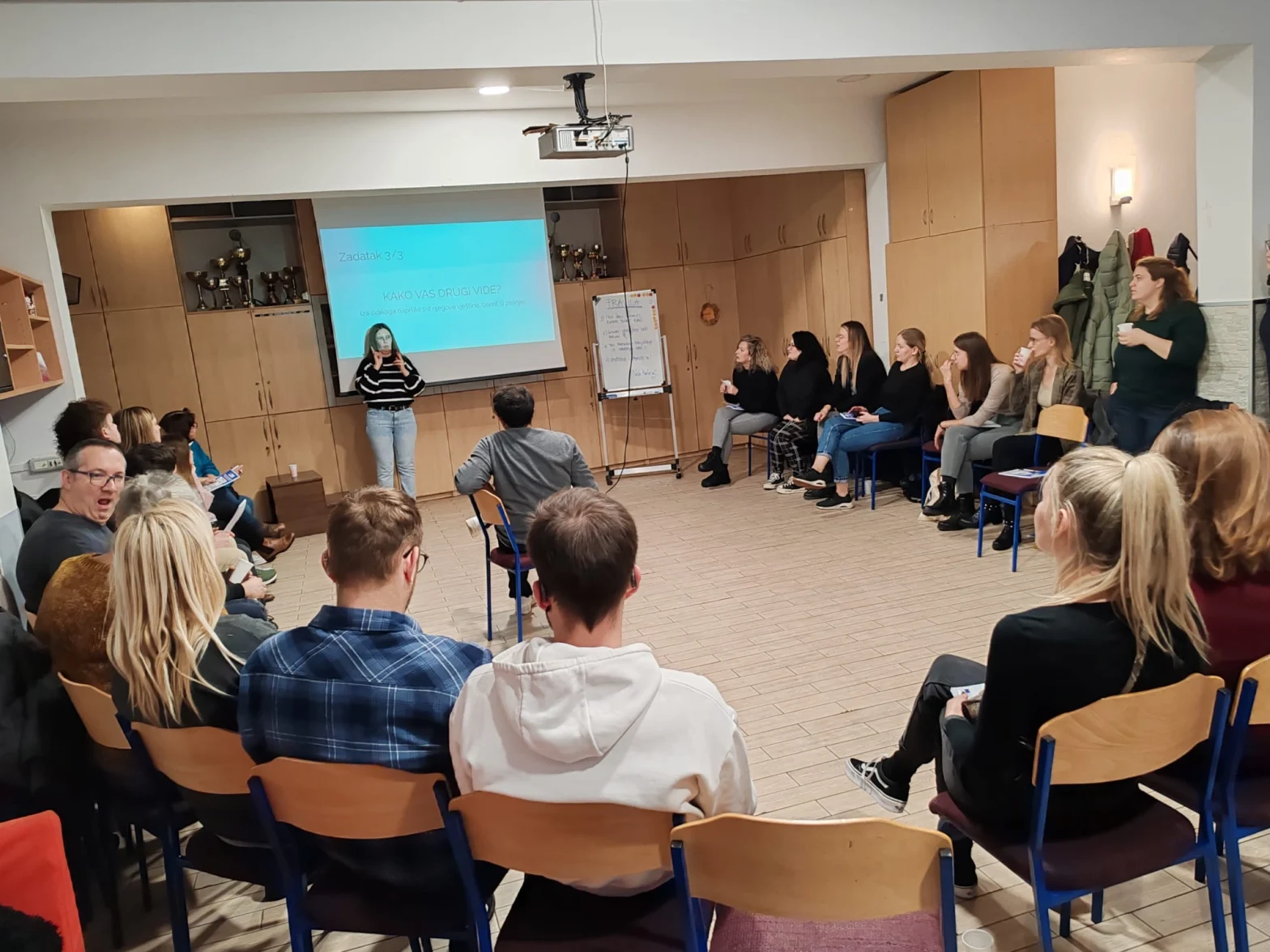
In December 2024, two full-day local workshops were successfully organised in Zagreb as part of the Taking Matters Into Our Own Hands: Employment and Entrepreneurship project. Hosted by the Association of Deaf and Hard of Hearing of the City of Zagreb, the workshops brought together more than 40 deaf and hard of hearing young people, creating a dynamic space for learning, collaboration, and skill development.
The workshops, held on 7 and 14 December, focused on testing the project’s toolkit: a set of ready-to-use materials designed for youth workers and educators to support the development of employability and entrepreneurial competences among young people with communication barriers.
Throughout the sessions, participants engaged in a variety of interactive and practical activities. The first workshop focused on communication and creativity, with participants developing pitching skills through exercises such as elevator pitches and group presentations. They also explored inclusive design, learning how to generate ideas for accessible products and services while applying design thinking principles.
The second workshop shifted focus toward financial literacy and teamwork. Through role-playing real-life financial scenarios, participants practiced budgeting, decision-making, and resource management. They further strengthened their understanding of financial concepts by creating simple financial plans and participating in a quiz-based learning activity. Teamwork and collaboration were explored through hands-on challenges, including problem-solving tasks and an engaging escape room activity.
Both workshops were designed using non-formal education methods, ensuring active participation and experiential learning. Participants worked in groups, shared ideas, and reflected on their learning, strengthening not only their professional competences but also their communication and teamwork skills.
Feedback from participants was highly positive, with many highlighting the practical nature of the activities and the opportunity to apply new knowledge in real-life situations. The workshops confirmed the relevance and effectiveness of the developed toolkit, providing valuable insights for its further improvement.
These local activities represent an important step in empowering deaf and hard of hearing youth by equipping them with skills for employment and entrepreneurship, while also supporting youth workers and educators with innovative and inclusive tools.